 Jinyuan
Industrial Whitepaper: Sourcing Heavy Duty Shovels & Tools
An in-depth guide on metallurgical standards, manufacturing systems, and supply-chain logistics for enterprise procurement teams.
1. Metallurgical Performance Standards in Spade Shovel Production
Heavy-duty spade shovels are the workhorses of landscaping, building, and farming industries. A common procurement pitfall is buying shovels made of low-grade hot-rolled carbon steel (such as standard Q235 steel), which bends easily when loaded. Premium China factories prioritize high-strength manganese steel alloys, specifically 50Mn and 65Mn, or recycled railroad tracks (known as rail steel).
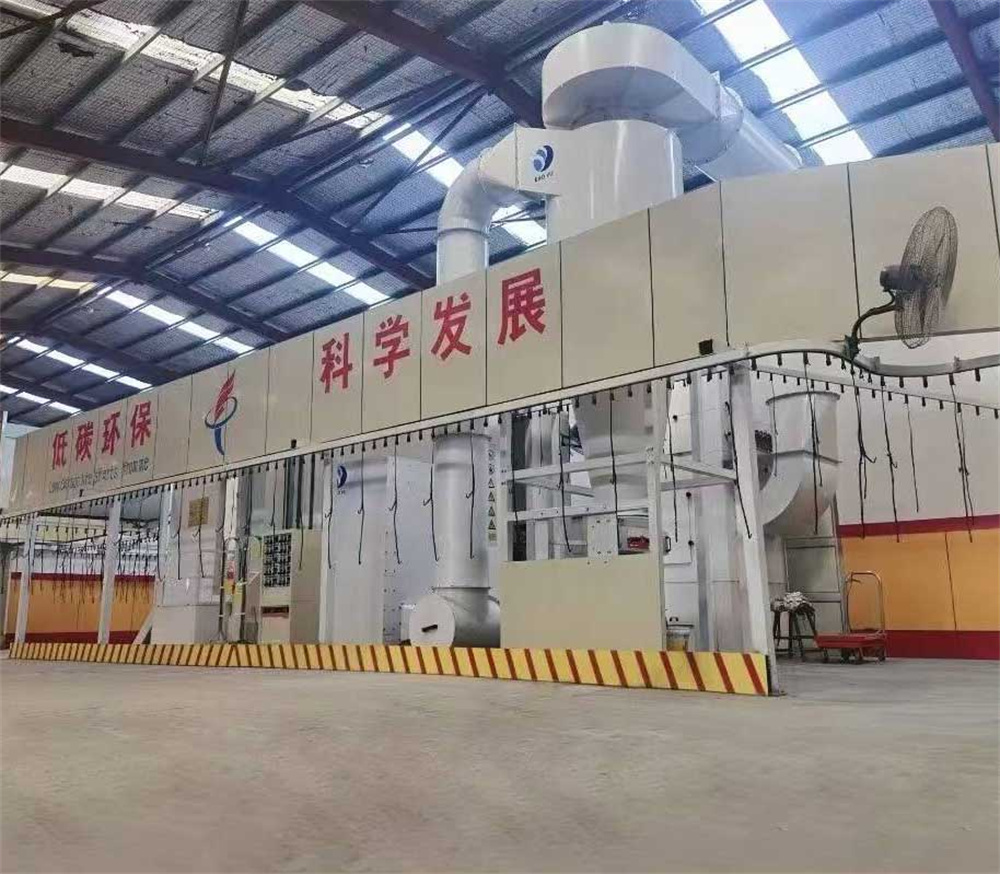
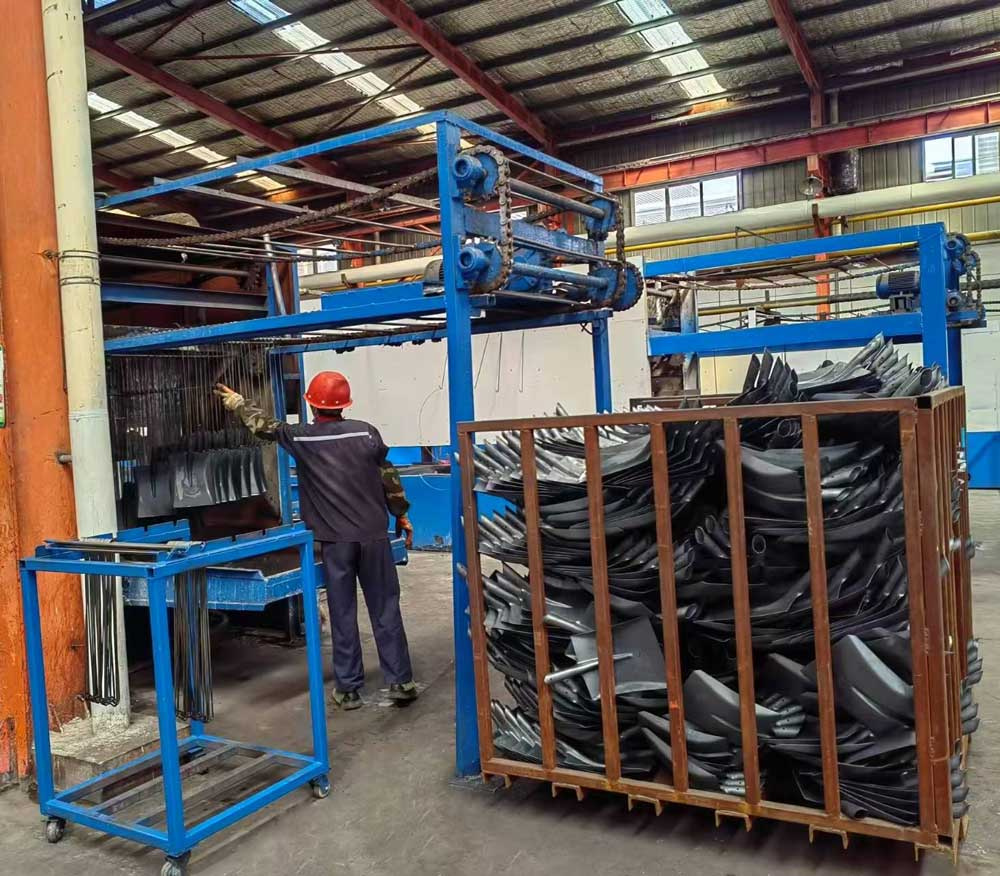
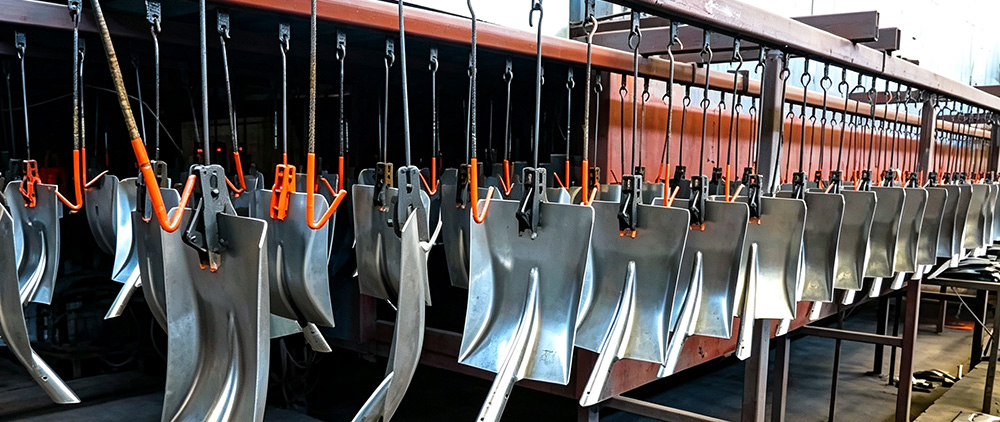
Through hot stamp forging or roll-forging, steel crystals are compressed, increasing structural integrity. Next, the shovel blades undergo continuous heat treatment—heating above 850°C for complete austenitization, followed by oil or water quenching, and tempering at 400°C–450°C. This delivers a surface hardness of 40 to 48 HRC (Rockwell Hardness). This metallurgical structure prevents deformation under heavy leverage while keeping the blade tough enough to resist cracking when striking stone or thick roots.
| Steel Grade Code | Carbon Content (%) | Manganese Content (%) | Standard Hardness | Optimal Use Cases |
|---|---|---|---|---|
| Q235 (Low Carbon) | 0.14 - 0.22% | 0.30 - 0.65% | < 30 HRC | Light domestic gardening, soft soil tasks |
| 50Mn (Medium Carbon) | 0.48 - 0.56% | 0.70 - 1.00% | 38 - 44 HRC | Professional agriculture, contracting, standard digging |
| 65Mn (High Elasticity) | 0.62 - 0.70% | 0.90 - 1.20% | 42 - 48 HRC | Heavy-duty root slicing, rocky soils, industrial digging |
| Premium Rail Steel | 0.65 - 0.82% | 0.60 - 1.00% | 44 - 50 HRC | Extreme contracting, clay mining, trenching shovels |
2. Critical Design Configurations: Collar & Handle Joints
The connection point where the shovel socket joins the handle bears the highest stress load. Our engineering teams analyze failure rates across three structural designs:
- Open Back Sockets: Formed from a flat sheet of metal, leaving a hollow section on the reverse side. This design is cost-effective, lightweight, and suitable for retail consumer markets, but is more vulnerable to dirt build-up and bending under excessive leverage.
- Solid Back Sockets: Feature a welded steel plate covering the socket back. This creates a solid structure that prevents soil buildup and significantly increases bending strength, making it ideal for professional use.
- Closed Back & Strap Sockets: The gold standard for heavy construction. The socket features two long steel extension straps welded or riveted to the wood handle. This disperses shear forces across a longer handle section, virtually eliminating joint breakages.
3. Handle Material Optimization: Ashwood, Fiberglass, and Composites
Selecting handle materials requires balancing durability, weight, and environmental performance:
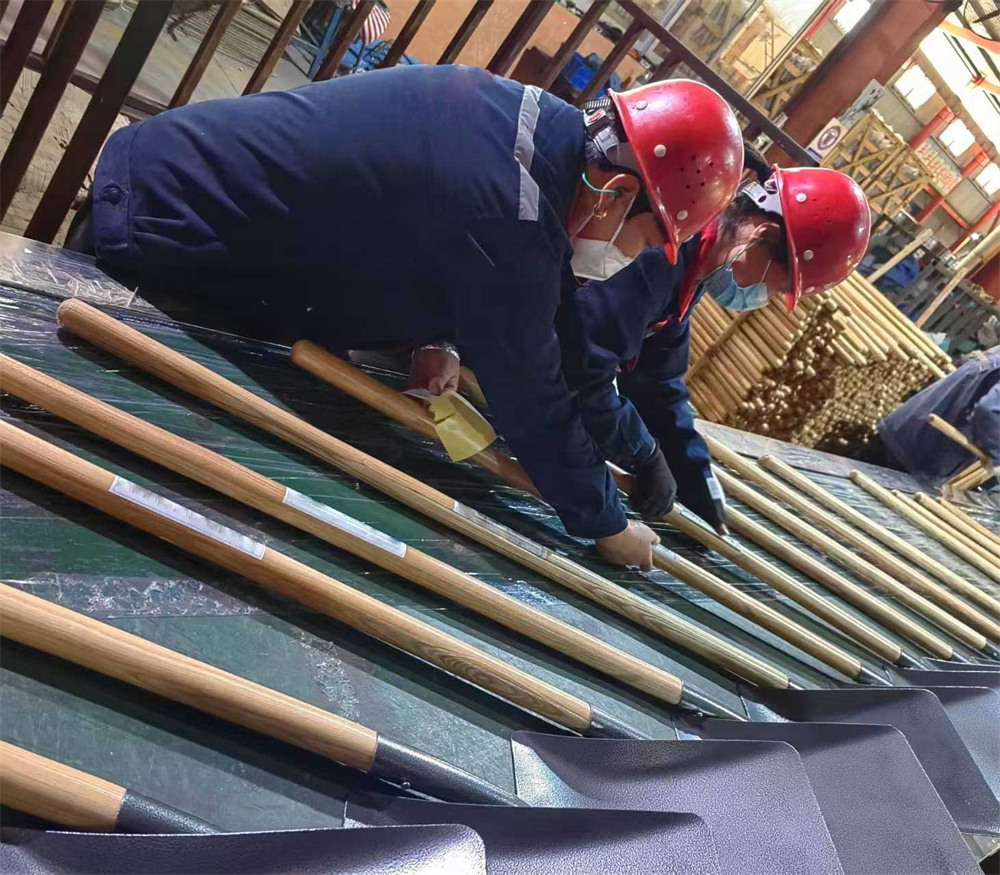
- American / European Ashwood: Highly valued for its straight grain, shock-absorbing properties, and flexibility. China factories dry this timber to a moisture content of 10%–12% before lacquer coating, preventing shrinkage and keeping the tool reliable under changing climates.
- Tubular Fiberglass: Constructed with continuous glass fiber strands wrapped in resin. This provides weather resistance, chemical stability, and high flexural strength. Solid fiberglass plugs are added near the collar joint to protect against shear forces.
- Reinforced Polypropylene (PP) & Elastomer (TPE) Handles: Designed with ergonomics in mind. D-grips made from heavy-duty PP offer comfortable, non-slip use in cold or wet conditions.