China Top Small Spade Shovel Supplier for Global Buyers?

Time:2026-10-23 Author:Sophia
0%

China has become a significant sourcing base for hand tools, including the Small Spade Shovel. Its manufacturing strength covers forged steel blades, fiberglass handles, wooden shafts, and private-label packaging. However, low pricing alone does not prove dependable quality.

Market research from Grand View Research and The Freedonia Group shows steady demand for gardening tools, supported by home cultivation, landscaping, and professional maintenance. These reports also highlight a practical shift toward durable, ergonomic, and easy-to-store equipment. Buyers should examine more than catalog photographs. Blade thickness, edge hardness, handle alignment, grip comfort, coating adhesion, and carton protection matter during real use.

John Stanley, a recognised garden-industry analyst, has repeatedly stressed that successful garden products must solve clear customer problems rather than simply appear attractive. That principle fits every Small Spade Shovel purchase. A compact shovel should cut firm soil cleanly, lift compost without bending, and remain comfortable after repeated use. Small details become expensive problems.

China’s leading suppliers often support OEM colors, laser logos, sampling, and mixed container orders. Yet supplier claims still require verification. Ask for material specifications, inspection records, production samples, and test photos. ISO 733 can provide a useful reference for spade and shovel dimensions, although buyers should confirm the applicable requirements for their markets.

The strongest supplier is not always the cheapest. It is the one that delivers consistent batches, honest tolerances, protective packaging, and responsive communication. Some product pages overstate durability. That deserves caution. This guide compares China’s top Small Spade Shovel suppliers through product quality, manufacturing experience, customization, export reliability, and buyer feedback.
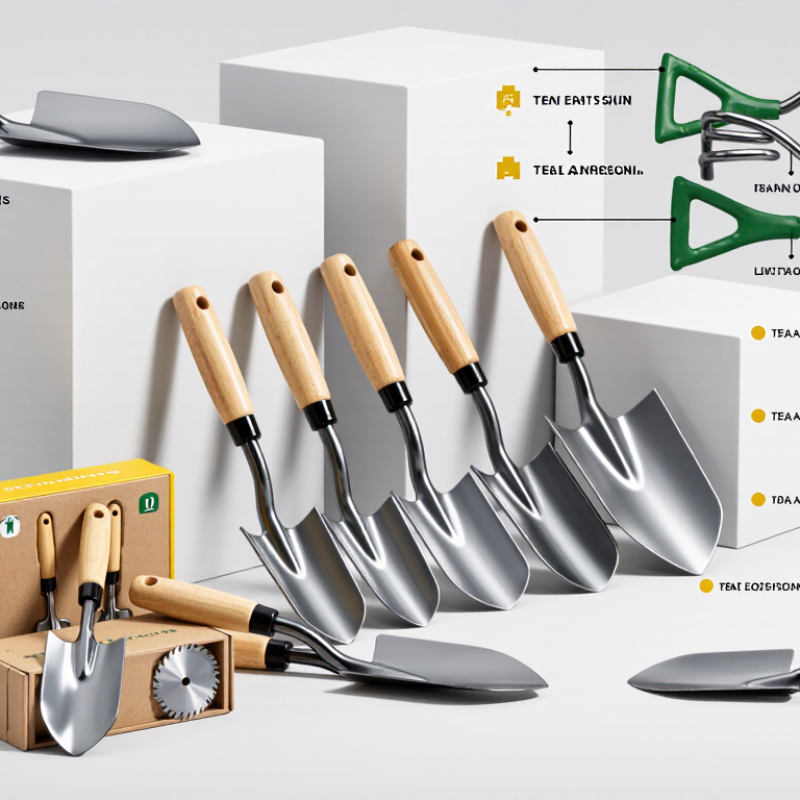
China Top Small Spade Shovel Supplier for Global Buyers?

What Defines a Top Small Spade Shovel Supplier in China?

What Defines a Top Small Spade Shovel Supplier in China?

A top small spade shovel supplier combines field experience with disciplined manufacturing control. The supplier should understand how blade thickness, steel hardness, and handle length affect digging comfort. A compact shovel must enter firm soil without bending at the neck. Its grip should remain stable when hands are wet or gloved. Small details matter.

Reliable suppliers provide clear drawings, material information, and inspection records. They check blade dimensions, edge alignment, weld strength, coating quality, and handle fit. Samples should be tested in different soil conditions, not only displayed in a showroom. A trial order can reveal uneven edges, loose joints, or weak packaging. Those findings deserve honest discussion.

Production transparency also separates experienced suppliers from ordinary factories. Buyers should receive realistic lead times, protective packaging details, and shipment updates. Traceable batch records can help identify problems later. Custom colors and logos are useful, but structural quality must remain the priority. Some suppliers may promise too much before testing. That is a warning sign. Even careful factories can miss a small defect, so independent inspection remains valuable. A dependable partner accepts feedback and adjusts tooling, materials, or packing when evidence supports change.

Main Types and Applications of Small Spade Shovels

Small spade shovels serve different jobs, and their shapes matter. A pointed digging spade penetrates compact soil, while a square-mouth spade moves compost, sand, and loose mulch. A narrow transplanting spade fits between roots and reduces unnecessary disturbance. Folding spades suit camping and vehicle emergency kits, but their hinges need careful inspection. For precise garden work, a hand trowel is often better than a long-handled spade. The wrong tool can damage roots or strain the user’s wrist.

Grand View Research reports that the global gardening equipment market was valued at about USD 30 billion in 2023, with continued growth expected through 2030. This demand supports wider sourcing of small digging tools, especially for home gardening, landscaping, nursery production, and light construction. In practical supplier evaluations, buyers should check blade thickness, carbon-steel or stainless-steel composition, weld consistency, handle ergonomics, coating adhesion, and corrosion resistance. The International Organization for Standardization also emphasizes reliable material and performance testing in hand-tool manufacturing, although small spades do not share one universal global standard.

A China-based supplier should provide measurable specifications, sample testing, load results, and traceable inspection records. Factory photos are not enough. In field trials, a slightly heavier blade often feels stronger, but it may cause fatigue during repeated planting. That trade-off deserves review. Soil hardness, shipment requirements, and the buyer’s target users should shape the final design.

Manufacturing Processes and Material Standards

China Top Small Spade Shovel Supplier for Global Buyers?

A reliable small spade begins with controlled material selection, not attractive packaging. Manufacturers commonly use carbon steel for strength and stainless steel for corrosion resistance. The chosen grade should match soil conditions, moisture, and expected workload. Buyers should request material certificates and confirm the applicable ASTM, ISO, or national requirements.

Production usually starts with cutting steel sheets into measured blanks. Hydraulic presses then shape the blade and reinforce its socket. Heat treatment can improve hardness, but excessive heating may create brittleness. This detail is easy to overlook. Welding quality also matters around the handle joint, where repeated digging creates stress. Skilled inspectors check weld penetration, blade thickness, edge alignment, and surface defects.

Protective finishing may include powder coating, painting, or corrosion-resistant treatment. The coating should remain attached after abrasion testing and outdoor exposure. Handles require equal attention. Hardwood needs controlled moisture, while fiberglass or polymer handles require stable dimensions and secure fitting. Batch numbers, inspection records, and sample testing help buyers trace production problems. In practical sourcing, small differences between batches can affect performance. No process is flawless. A supplier willing to discuss rejected samples, tolerance limits, and corrective actions usually demonstrates stronger manufacturing discipline than one offering only low prices.

China Top Small Spade Shovel Supplier for Global Buyers: Manufacturing Processes and Material Standards

The chart compares minimum yield strength and tensile strength for widely recognized structural steel grades that may be specified for small spade components. Material selection should be combined with stamping, heat treatment, welding, coating, and dimensional inspections to meet the buyer’s application and regional compliance requirements.

Reference values: ASTM A36 and EN 10025 grades. Actual shovel performance also depends on blade geometry, thickness, forming quality, heat treatment, and corrosion protection.

Quality Control, Certifications, and Export Capabilities

A reliable small spade shovel supplier must prove quality through repeatable controls, not attractive product photos. Experienced buyers usually request material specifications, handle dimensions, blade thickness, and surface-treatment details before placing an order. Each production batch should include checks for blade shape, weld strength, handle alignment, and coating coverage. Practical inspections matter. A shovel that looks strong may still loosen after repeated digging.

Quality records should connect raw materials with finished cartons. Sampling plans, measurement reports, and pre-shipment inspections provide useful evidence. ISO 9001 certification can indicate an established quality-management system, but it does not automatically prove every shovel meets buyer requirements. Product testing should match the destination market and agreed specifications. Certificates must be current, verifiable, and issued by competent organizations.

Export capability also depends on careful documentation. A capable supplier should prepare accurate packing lists, commercial invoices, country-of-origin details, and suitable shipping marks. Strong cartons, moisture protection, and pallet stability reduce damage during long transportation. Clear communication about Incoterms and delivery schedules prevents costly misunderstandings. Small errors happen. A missing label or incorrect carton count can delay a shipment. Suppliers should record corrective actions instead of hiding them. Buyers can strengthen trust by requesting samples, checking production consistency, and reviewing inspection evidence before full-scale purchasing.

How Global Buyers Can Evaluate Chinese Suppliers

China Top Small Spade Shovel Supplier for Global Buyers?

How Global Buyers Can Evaluate Chinese Suppliers

A reliable Chinese small spade supplier should provide more than attractive product photos. Ask for steel grade, blade thickness, handle material, dimensions, weight, and surface treatment. These details affect digging strength, corrosion resistance, shipping cost, and user comfort. Request a physical sample before discussing large orders. A sample reveals loose joints, sharp edges, uneven coating, and uncomfortable grips quickly.

Factory verification needs practical evidence. Review production photos, equipment lists, quality procedures, and recent inspection records. If possible, arrange a video call from raw material storage to packing. Check whether workers measure blade thickness and test handle attachment during production. Ask how defective tools are separated and recorded. A polished factory tour can still mislead. I would treat clear, dated records as stronger evidence than confident promises.

Communication also matters. Compare how quickly the supplier answers technical questions and corrects misunderstandings. Confirm packaging strength with a drop-test sample, especially for long-distance transport. Discuss minimum order quantity, lead time, spare packaging, payment stages, and document accuracy in writing. Request references from buyers in similar markets, but verify them independently. Price deserves scrutiny. An unusually low quote may hide thinner steel, weaker handles, or inconsistent finishing. Even experienced buyers can overlook small details when comparing spreadsheets. Leave room for a second inspection.

China Top Small Spade Shovel Supplier for Global Buyers? - How Global Buyers Can Evaluate Chinese Suppliers
Evaluation Dimension What Global Buyers Should Check Practical Benchmark or Data Point Recommended Verification Evidence Common Risk Signal
Product Application Define whether the small spade will be used for gardening, nursery work, camping, emergency kits, or light construction. A gardening trowel, transplanting spade, and compact digging shovel require different blade shapes, handle lengths, and strength levels. Provide a written product specification covering intended use, soil conditions, dimensions, and load expectations. One generic model is presented as suitable for every application without a defined use case.
Blade Material Confirm the steel type, thickness, heat treatment, edge design, and corrosion protection. Common small-spade blade thicknesses are approximately 1.5–3.0 mm, depending on the intended workload. This is a specification range, not a universal requirement. Review the material specification, production sample, dimensional report, and independent material or hardness test when required. Material is described only as “high-quality steel” without a grade, thickness, or test information.
Blade Geometry Evaluate blade width, length, curvature, tip shape, side profile, and usable digging area. Compact hand spades commonly have working blade lengths of about 150–250 mm. Actual dimensions should match the buyer’s application and packaging limits. Approve a dimensioned drawing and inspect production samples against agreed tolerances. Samples vary visibly in blade curvature, tip alignment, or overall dimensions.
Handle and Grip Check handle material, ergonomic shape, grip texture, connection method, and resistance to loosening. Typical compact handles use wood, fiberglass, steel, or reinforced polymer. Material choice affects weight, comfort, moisture resistance, and service life. Inspect the handle-to-socket connection, perform pull and twist checks, and request details of the handle material and finish. The handle has visible cracks, sharp edges, excessive flexing, or movement at the socket.
Welds and Joints Inspect weld continuity, socket alignment, rivets, fasteners, and transitions between the blade and handle. Joints should be secure, aligned, free from sharp projections, and appropriate for the expected digging force. Use first-article inspection, visual inspection, dimensional checks, and a documented functional test. Incomplete welds, uneven joints, exposed burrs, loose rivets, or inconsistent alignment are found.
Strength and Durability Assess bending resistance, handle retention, edge durability, and repeated-use performance. There is no single global strength value for every small spade. The buyer should define a test load, test method, and acceptance limit before production. Approve a buyer-specific test protocol using samples from the intended production process; retain test records and failed samples. The supplier provides only marketing claims such as “unbreakable” without test conditions or results.
Corrosion Protection Verify paint, powder coating, oil treatment, plating, or stainless-steel construction according to the sales environment. Outdoor tools require a finish that protects exposed steel during storage, transport, and normal use. Coating performance depends on surface preparation and coating thickness. Check the coating specification, surface preparation process, appearance standard, and salt-spray or corrosion test report when contractually required. Coating is uneven, easily scratched, poorly bonded, or applied over visible rust and contamination.
Dimensional Consistency Control blade size, total length, handle diameter, weight, hole position, and packaging dimensions. Use buyer-approved tolerances for every critical dimension. Weight consistency is especially important for retail packs and freight calculations. Request a signed technical drawing, inspection checklist, and sample measurement report from the production batch. Dimensions are quoted as approximate only, with no tolerance or change-control procedure.
Material Traceability Determine whether steel, handles, coatings, and packaging components can be traced to purchase records and production batches. Traceability should link incoming materials, production dates, inspection results, and shipment lots. Review batch coding, incoming-material records, production records, and retained samples. The supplier cannot identify the material source or production batch for a delivered product.
Quality Management Review incoming inspection, in-process controls, final inspection, nonconformity handling, and corrective actions. A documented quality system should define inspection frequency, sampling method, acceptance criteria, and responsibility for approval. Request quality procedures, recent anonymized inspection records, corrective-action examples, and an independent factory audit if needed. Quality control depends entirely on a final visual check or informal worker judgment.
Compliance Documentation Identify the legal and market-specific requirements for the destination country, including product safety, chemical restrictions, labeling, and packaging. Requirements differ by destination and product classification. Documentation should be matched to the actual product, materials, and intended market. Verify declarations, test reports, chemical compliance documents, labels, warnings, and packaging artwork before shipment. Generic certificates are offered without product identification, test scope, date, or issuing laboratory details.
Packaging Protection Check individual packing, carton strength, moisture protection, edge protection, barcode placement, and palletization. Packaging should prevent blade damage, coating abrasion, carton collapse, and moisture exposure during normal international transport. Conduct a packaging drop or transport simulation appropriate to the distribution channel and inspect a packed shipment sample. Sharp blades are exposed, products move freely inside cartons, or carton dimensions are not confirmed before order placement.
Order Flexibility Clarify minimum order quantity, sample policy, customization limits, tooling fees, color options, and production lead time. MOQ and lead time vary by construction, packaging, customization, and production schedule; they must be stated in the quotation and purchase contract. Obtain a written quotation with item code, quantity basis, sample charges, tooling ownership, lead time, and validity period. Important commercial terms are communicated verbally and change after sample approval.
Cost Structure Compare product price, tooling, packaging, inspection, inland transport, export handling, freight, duties, and payment costs. Compare equivalent trade terms and specifications. A lower unit price may result from thinner steel, simpler packaging, or reduced inspection. Request a transparent quotation under a clearly stated Incoterm and compare total landed cost rather than unit price alone. The quotation omits packaging, tooling, inspection, or other charges that appear later in the order process.
Delivery Reliability Evaluate production capacity, seasonal constraints, raw-material availability, and shipment planning. Delivery performance should be measured against confirmed production and shipping dates, not informal estimates. Review anonymized on-time delivery data, capacity statements, production schedules, and the supplier’s escalation process. The supplier refuses to provide a confirmed schedule or repeatedly changes the promised shipment date.
Pre-Shipment Inspection Define inspection timing, sample size, defect classification, packaging checks, and release conditions. Inspection should cover appearance, dimensions, function, quantity, labeling, packaging, and agreed critical defects. Use an approved inspection checklist and require an inspection report before final payment or shipment release. The supplier treats inspection as optional or rejects agreed acceptance criteria after production begins.
After-Sales Support Confirm the process for complaints, replacement units, corrective action, spare components, and warranty claims. Commercial terms should define response time, evidence requirements, responsibility for verified defects, and resolution options. Include a written quality agreement and retain photos, batch codes, inspection records, and shipment documentation. There is no documented complaint process or the supplier will not accept responsibility for verified production defects.
Supplier Risk Rating Score technical capability, quality control, commercial transparency, delivery reliability, and communication. 80–100: Lower observed risk
60–79: Conditional approval
Below 60: Further verification required
Use a weighted scorecard based on samples, documents, audit findings, inspection results, and completed shipments. A supplier is selected solely because of the lowest quotation or an attractive online product listing.

FAQS

What are the main types of small spade shovels?

Pointed blades penetrate compact soil. Square-mouth blades move compost, sand, and loose mulch. Narrow blades fit between roots.

When is a folding spade useful?

A folding spade suits camping and vehicle emergency kits. Check the hinge before use. Loose hinges can reduce digging control.

Is a small spade suitable for precise planting?

A hand trowel often works better for small planting holes. It reduces wrist strain and limits root disturbance.

Which materials are commonly used for small spade blades?

Carbon steel offers strength. Stainless steel resists moisture and corrosion. The best choice depends on soil, climate, and workload.

What should buyers request from a supplier?

Request material certificates, blade thickness, dimensions, weight, handle details, and inspection records. Factory photos alone are insufficient.

How can buyers check manufacturing quality?

Review steel storage, cutting equipment, forming methods, welding, and coating tests. Ask how defective tools are separated and recorded.

What should a physical sample reveal?

A sample can show loose joints, sharp edges, uneven coating, and an uncomfortable grip. It cannot reveal every batch problem.

How should buyers compare supplier prices?

Compare steel thickness, handle strength, finishing quality, packaging, and lead time. An unusually low price may hide weaker construction.

What packaging checks are useful?

Use a drop-test sample for long-distance transport. Inspect crushed corners, exposed blades, and damaged handles. Packaging still deserves review.

What trade-off matters during product selection?

A heavier blade may feel stronger but cause fatigue during repeated planting. I might prefer strength too quickly. User comfort matters.

Conclusion

Choosing a top Small Spade Shovel supplier in China requires more than comparing prices. Reliable suppliers typically offer a broad range of compact spades for gardening, landscaping, camping, construction support, and other practical applications. They should understand differences in blade shape, handle design, size, weight, and user requirements. Strong manufacturing capability also includes suitable material selection, accurate forming, secure handle assembly, corrosion-resistant finishes, and consistent production standards.

Global buyers should examine a supplier’s quality control system, product inspection procedures, certifications, packaging methods, production capacity, and export experience. Clear communication, stable lead times, flexible customization, and transparent documentation are equally important. Buyers can reduce sourcing risks by requesting samples, reviewing factory capabilities, confirming material specifications, checking batch consistency, and evaluating after-sales support. A dependable Chinese supplier combines durable products, efficient production, responsible service, and the ability to meet different market requirements consistently.


Sophia

Sophia

Sophia is a dedicated marketing professional with an exceptional depth of knowledge about her company's products and services. With a keen understanding of market trends and customer needs, she crafts insightful blog posts that not only inform but also engage readers, enriching the company’s online......