Global buyers entering the 2026 hand-tool market need more than a low quoted price. They need a Small Metal Shovel that survives soil, moisture, transport, and repeated impact. The right choice depends on steel quality, blade geometry, handle strength, corrosion protection, and supplier consistency.
World Steel Association data reported global crude-steel production at approximately 1.9 billion tonnes in 2024. This scale confirms steel availability, but it does not guarantee suitable shovel performance. Carbon steel can deliver strong digging edges, while stainless steel offers better corrosion resistance in wet environments. Buyers should request material specifications, hardness data, coating details, and production samples before placing large orders. A shiny surface proves little.
Trade statistics from the International Trade Centre show how hand tools move through complex global supply chains. Freight cost, packaging volume, tariff classification, and delivery reliability can change the real purchase price. A compact shovel with a 200-millimetre blade may reduce carton space, yet its socket must still resist twisting. Test it in packed clay, not only loose garden soil. That matters.
Safety and quality expectations also vary by market. The European Commission’s General Product Safety Regulation strengthens traceability expectations for consumer products sold in the European Union. Other markets may apply different labeling, documentation, or material requirements. Buyers should verify these obligations with qualified local advisers. No single industry report isolates the global Small Metal Shovel segment perfectly. That is an important limitation. Therefore, this guide compares measurable specifications, field experience, supplier evidence, and total landed cost rather than trusting marketing claims alone. Even experienced purchasers can miss small defects. A weak weld can fail quietly, then suddenly.
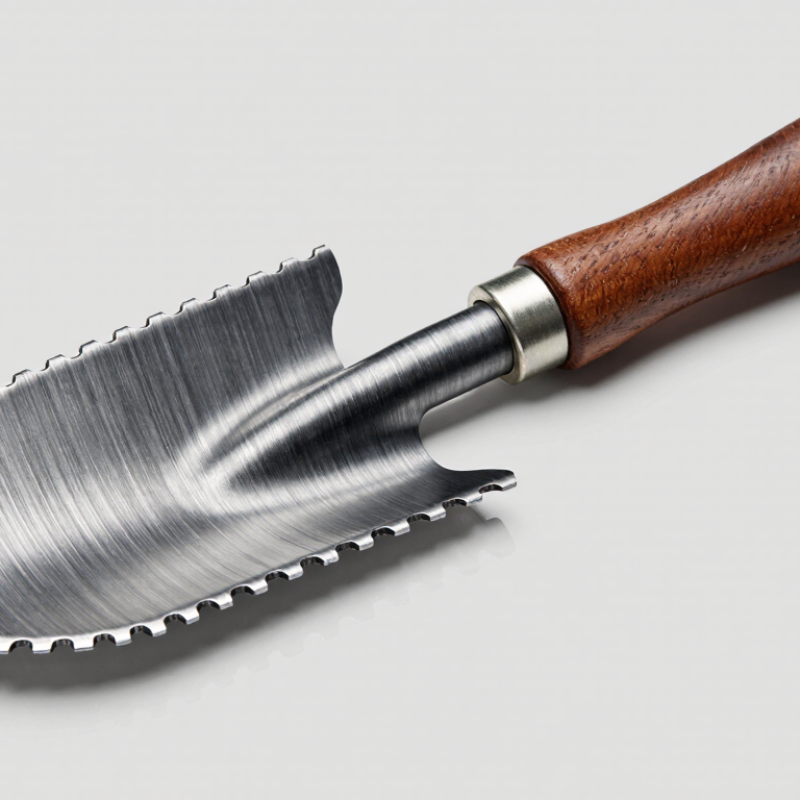
In 2026, a high-quality small metal shovel should feel balanced before it feels heavy. Its blade needs enough strength for compact soil, gravel, and planting work. Carbon steel offers strong digging performance, while stainless steel resists moisture and surface rust. The better choice depends on working conditions. Check the blade thickness, edge shape, and connection point carefully. A clean weld or secure socket can prevent wobbling during repeated use. The handle should provide control without causing wrist strain. A textured grip helps when gloves become wet.
Real use reveals details that product photos hide. I once tested a compact shovel with a bright finish, but its edge bent after several hard impacts. The appearance suggested quality. The structure disagreed. Look for smooth edges, even coating, and a handle that stays firm under twisting pressure. Weight also matters for global buyers. A very light model may reduce shipping costs, yet it can feel weak in dense ground. Ask suppliers for material details, dimensional tolerances, load testing, and corrosion testing. Reliable documentation is more useful than vague claims.
Tips: Request a sample before ordering in volume. Press the blade against firm soil and inspect the joint afterward. Check packaging protection, export dimensions, and replacement-part availability. No shovel is perfect. A small weakness may only appear after weeks of use.
It should feel balanced, not simply heavy. Check blade strength, edge shape, handle control, and the joint. A polished surface proves little.
Carbon steel suits compact soil, gravel, and repeated digging. Stainless steel handles moisture and salt better. Aluminum reduces weight but may feel less stable. The working environment matters more than the label.
Look for even thickness, smooth edges, and no visible bending. Press the blade into firm soil. Inspect it afterward. My earlier test was too gentle.
A loose socket can cause wobbling and wasted effort. Check the weld or connection point closely. Apply gentle twisting pressure. It should stay firm.
Fiberglass resists moisture and usually feels stable. Steel provides strength but may transmit vibration. Wood feels warm, yet poor storage can cause cracks. Gloves change the feeling.
No. A lighter tool may reduce shipping weight, but excessive lightness can weaken digging stability. Compare packed weight with blade thickness. A very light model may disappoint.
A narrow blade fits rocky soil and tight spaces. A wider blade moves loose soil faster. Snow, planting, and emergency digging require different shapes. One design cannot suit every task.
Request a physical sample, steel grade, blade thickness, handle length, coating details, and test records. Check packaging size and replacement parts. One sample helps, but it cannot reveal every weakness.
Choosing the best Small Metal Shovel in 2026 requires more than comparing appearance or price. A high-quality model should combine a durable, corrosion-resistant metal blade with a secure handle, balanced weight, and comfortable grip. Different designs serve different purposes, including gardening, camping, vehicle emergencies, landscaping, and general outdoor work. Buyers should evaluate blade shape, edge strength, handle length, folding features, and total weight according to how and where the shovel will be used.
For global buyers, portability, safety, maintenance, and climate resistance are equally important. A compact shovel should be easy to carry and store without sacrificing stability or digging performance. Protective coatings can help reduce rust in humid or coastal environments, while proper cleaning and drying can extend service life. Buyers should also consider user height, hand comfort, packaging, transport requirements, and regional climate conditions. By matching materials, construction, size, and intended use, purchasers can select a reliable Small Metal Shovel that offers practical performance across different markets and outdoor conditions.

 Jinyuan